
By Dan Ketchum
If you’re new to partaking, the abundance of canna-culture jargon makes it exceptionally easy to get lost deep in the weeds, if you’ll excuse the expression. So let’s simplify the whole situation.
You don’t need a doctorate to understand what gummies you should grab from your favorite dispensary (or order online from Kiva). Let’s just start with the basics so you can get to the good parts, safely and confidently. Before you put those gummies in your cart, all you need is a bit of essential vocab in your quiver.
Is Hemp and CBD The Same?
Put simply: No, hemp and CBD are not the same thing. Hemp refers to the type of plant, while CBD is just one of the compounds it contains.
To best understand the difference between hemp and CBD, knowing four foundational definitions is key. While learning these fundamentals won’t turn you into Seth Rogen overnight, they will set you up for understanding just about all of the finer, more granular concepts that branch out from here. These are the stems, so to speak, and the leaves will come later.
-
Cannabis. Let’s get the most confusing part out of the way from the jump: hemp and cannabis (the latter of which is what most people mean when they say “marijuana”) aren’t different plants at all. They’re subspecies of the cannabis plant, the flowering Cannabaceae that all those fun gummies are infused with. The key difference between the two lies in how much THC they contain. Which brings us to...
-
Hemp. Among many naturally occurring compounds, the cannabis plant contains a natural chemical compound called THC (more on that next). The only difference between what is legally called “hemp” and what is legally called “cannabis” (or colloquially called marijuana, weed, pot, ganja, and so on) is that hemp contains 0.3% or less THC content by dry weight. Anything above that — some plants are bred to contain way more THC than that — and it’s legally called cannabis. That’s it.
Now about that THC...
-
THC. THC stands for tetrahydrocannabinol, the naturally occurring compound (these various compounds are called cannabinoids, by the way) in the hemp or cannabis plant that makes you feel “high.” That means it’s psychoactive, or can affect the mind or mental processes.
-
CBD. So are hemp and CBD the same? Nope – CBD, like THC, is a compound that naturally occurs in the hemp plant. Short for cannabidiol, CBD is non-intoxicating, and while it may produce some of the effects commonly associated with partaking, such as feeling physically relaxed, it does not produce the mental effects of THC.
Basically, different varieties, or strains, of hemp and cannabis plants are bred and grown to contain varying levels of cannabinoids like THC and CBD. The concentration of these compounds can greatly affect how the gummies, oils, edibles, or flower (the sticky green buds that are rolled into joints or smoked in pipes) make you feel when you partake in products derived from different plants.

Hemp-Derived vs. Cannabis-Derived
Because both hemp and cannabis contain CBD, brands like Kiva can choose to make their products from one subspecies or the other. (Whether they choose to use hemp or cannabis often comes down to what’s legal in the particular state the products will ultimately be sold in.) This is why you’ll see labels like “hemp-derived CBD” or “hemp-derived THC” when shopping. All it means is that the CBD (and THC) in the product was distilled from a plant legally classified as hemp, or legally classified as cannabis, respectively.
Whether a product has been hemp-derived or cannabis-derived doesn’t alter how it hits you. THC is still THC, and CBD is still CBD, whether you get it from a plant legally defined as hemp or legally defined as cannabis. And oftentimes, it is just that: a legal consideration that enables dispensaries to safely sell THC and CBD products to consumers in our current moment, where cannabis legalization varies widely per state.

Choosing Your Gummies
You’ll often see more hemp-derived CBD simply because hemp plants tend to have a higher concentration of CBD, making it easier to extract; meanwhile, you’ll often see hemp-derived THC in states where cannabis-derived THC is not yet legal.
Again, the cannabinoids have largely the same effects when derived from either plant, but what are those effects? What can you expect when you partake in CBD or THC products, whether hemp- or cannabis-derived, or from products that contain a bit of both?
The Effects
Generally speaking, the psychoactive high of THC is just that: a high. It can shift how you feel mentally, with a spectrum of effects ranging from a bright, bubbly euphoria to a clear-eyed concentration to a giggly lightness to a mellow sense of mental relaxation (all depending on the strain of the plant; the easiest thing is to look for sativa and indica strains, where sativa is generally considered more energetic, and indica associated with a more chill and low-key experience).
CBD, on the other hand, has no psychoactive effects, so while it doesn’t make you feel high, it may affect you in ways similar to the other effects of THC. While everyone’s individual experience may vary, commonly felt effects of CBD may include physical relaxation, easing of tension, and a general sense of chill.
Gummies: What to Look For
Whether hemp-derived or cannabis-derived, THC and CBD show up in gummies both separately and sometimes in combination. By now, you know to seek THC if you want to get high and CBD if you want relaxing effects that don’t get you high, but keep dosages in mind, too. As a general rule of thumb, a solid baseline, day-to-day dose of either THC or CBD is around 5mg. Take that down to 2ish milligrams for a much lighter experience, bump it up to 10 and with increased potency you have increased effects, and so forth.
Keep an eye out for dosages on products that combine THC and CBD, too. The intent here is typically to offer a more balanced experience – gummies with more CBD than THC might make you feel just a little bit high while emphasizing overall relaxation or focus, while those with more THC will pack more of a mental high.
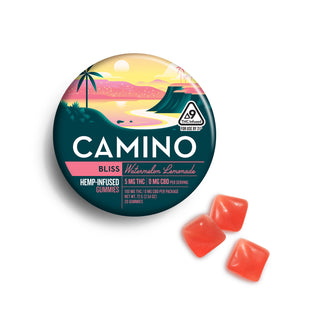
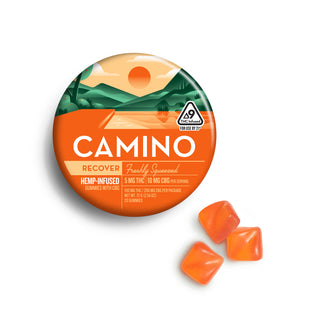
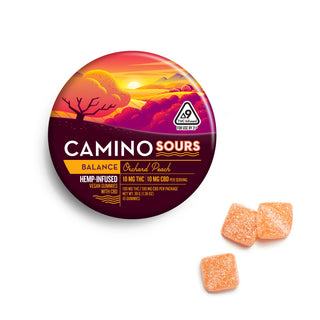
If you’re just getting your feet wet, we especially recommend our hemp-derived (see, you know what that means now!) Camino Sparkling Pear ‘Social’ gummies with a breezy 2mg of THC and 6mg of CBD for a lightly euphoric feeling with an easygoing vibe. Camino Sours Orchard Peach ‘Balance’ gummies – featuring 10mg each of hemp-derived THC and CBD – are also great for a more pronounced, but deeply centering feeling.
If you’re new to the space, always follow the age-old advice: start low and go slow. No matter which gummy you opt for, take a nibble, wait at least two hours for it to hit, and go from there — you can always nibble a little more and find the dosage that’s right for you.
Dan is a freelance writer, small business owner, and full-time creative living in Dallas, TX. In 15 years of writing, he’s been fortunate to collaborate with companies and publishers like Cannabis and Tech Today, Healthfully, Salon.com, ArtBase, The Seattle Times, USA Today, SF Gate, and many more.
Sources
Medical News Today - What Is the Difference Between Hemp CBD and Cannabis CBD?
Healthline - Hemp vs. Cannabis: What’s the Difference?
Psychology Today - Delta-8 and Delta-9 THC: What’s the Difference?
Weed.com - The Ultimate Guide to Delta-9 THC (Hemp-Derived vs. Cannabis Derived)
Healthline - The Health Benefits of CBD – and a Look at the Side Effects
Medical News Today - What to Know About the Entourage Effect of Cannabis