
With the new year upon us, it’s resolution time, and resolution time means a reassessment of habits. And if you ask us — or a whole lot of behavioral professionals, for that matter — you don’t need the excuse of a new year to examine your daily rituals and make them a bit healthier.
Whether it’s exercise, work, meditation, an artistic pursuit, or just the ability to get some solid relaxation in, let’s start with what makes habits different from rituals and routines, and then dive into some expert advice on how to lock them in, simply and healthily.
Habits vs. Routines vs. Rituals
If you do something with regularity in a sort of unconscious, on autopilot sort of way, you’ve got a habit. That means (most likely) you’ve established something as part of your day-to-day without a whole lot of intentionality. Whether that’s a good thing or not is entirely down to the habit itself. (Is it a toxic habit, like doomscrolling or drinking, or a healthy habit like reading before bed or stretching in the morning?)
That definition can be pretty black and white, but the way you go about practicing an action with regularity can really fall anywhere along a whole spectrum. While it may sound like a bunch of synonyms, there’s actually some significant distinction when we’re talking habits vs. routines, or even rituals vs. habits.
As Dr. Shoury Kuttappa, an emotional intelligence coach and neuro-linguistic programming practitioner, puts it, “A habit usually manifests itself as an automatic urge to do something, often triggered by a particular cue,” while “in contrast, routines require deliberate practice.” Oftentimes, habits are powered by a cue (“I’m at the gym, I start with toe touches”) or craving (“I hear Slack notifications, I really need coffee right now”). While cues can help us build routines, cravings are something we generally want to avoid building from.
Dr. Kuttappa notes that “both habits and routines are regular and repeated actions, but habits happen with little or no conscious thought, whereas routines require a higher degree of intention and effort.” The goal is, then, to turn your positive habits into something a little more intentional, deliberate, and thoughtful.
Routine vs. Ritual
While routines can often be a little healthier than habits, both are systemic. They’re functional things that we do, and in many cases, we do them because we have to. So what about the concept of routine vs. ritual?
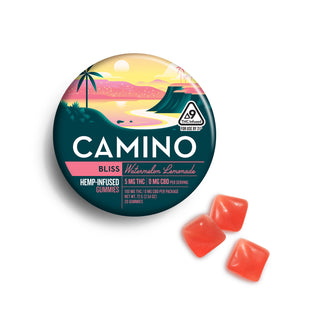
At its core, the ritual adds an affirmative emotional element to the routine, typically through the element of mindfulness. For example, you want to make cleaning your house a Sunday morning routine. It’s a routine indeed if you go about the process mechanically; it becomes a ritual when you add fulfilling emotional context like lighting all of your best candles, putting on your favorite vinyl record, or even taking a microdose of your favorite Camino Gummy to drop you into the zone. Taking a mindful approach by focusing on just the task at hand, rather than zoning out to a podcast or popping in your earbuds and calling your mom while you clean, can also elevate the task to a ritual.
Certified change management specialist Kristen B. Hubler puts it simply: “A habit is what you do; a ritual is how you do it. A habit is passive; a ritual is active. A habit is mechanical; a ritual is meaningful.”

How to Turn Daily Habits into Daily Rituals
Habits are oftentimes triggered by unconscious cues. One trick to turn those habits into routines — and those routines into rituals — is to make those cues conscious, and to execute the routine right after the cue. That’s the tip of the iceberg, but like all icebergs, the daily rituals iceberg goes a lot deeper.
Habit Stacking
Like most humans, you’ve got daily habits that you don’t even think about and habit stacking leverages those built-in habits to form new ones. Let’s use taking a shower as an example. Say you want to turn meditation into a routine. Try “stacking” that with your shower: you take a shower, then afterward you meditate for 10 minutes. This technique comes from Stanford Behavior Design Lab director B.J. Fogg, and can often serve as the foundation for building daily rituals that stick.
Swap It Out
If you’ve got a habit that you don’t think is adding to your life, try using that as a cue to initiate a new routine that is beneficial instead. Not proud of how often you pick up your phone to scroll TikTok slop? Keep a book handy. When you go to grab your phone, turn that impulse into a cue to grab a book and read a few pages instead.
Repetition and Reward
Even if you don’t nail your routine fully (more on that later), the most important thing you can do is repeat that routine or ritual. It sounds basic, but it’s true: just keep doing it, and you’ll improve. You’ll get there.
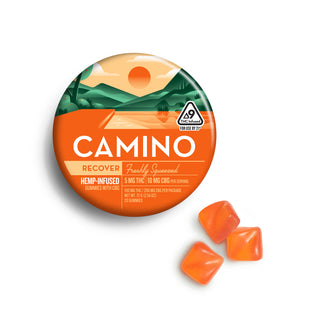
If you still need that extra bump, consider adding a small, healthy reward for a ritual-well-done. A sense of reward, especially one that’s tied to the nature of the ritual (like treating yourself to a nice, fancy green smoothie and a Camino Freshly Squeezed ‘Recover’ gummy after a workout), can add meaning to the ritual. ISHURI founder Ivan Nvagatare writes, “Habits offer us something to focus on and strive for, routines keep us on track and persistent, and rituals give our life meaning and purpose.”
Need reward inspo? We’ve got a few gummy-shaped ideas.
Start Small
Whether you’re starting an all-new routine or just trying to develop an old habit into an elevated ritual, it’s OK to take it one step at a time, and to celebrate each step. Want to cycle daily for 20 minutes, but you’ve only been able to do 10? That’s a victory. Practicing mindful body scanning while you lift weights, but your mind drifted to your fantasy draft during the second set? Still a victory. Try to get to the third set tomorrow.
Remember, a small win is still a win. Rituals take time.
Lock It In
Whether we’re talking healthy daily habits or mindful daily rituals, one thing can help us lock them down better than anything: accountability. Track your progress with a journal, which can itself be an act of mindfulness and reflection. Set milestones to celebrate progress. Ask a friend or family member to check in on you from time to time for accountability, or potentially join in on making it a regular ritual with you.
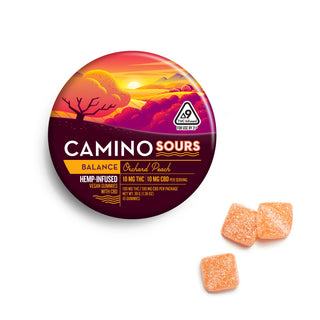
And speaking of friends to help you along the way, a little touch of uplifting focus might just be the thing that gets you over the edge from mindless habit to mindful ritual. Try inviting a friend like Camino Sours Orchard Peach ‘Balance’ or Camino Wild Berry ‘Chill’ gummies along for the journey. (P.S.: Subscribing to receive your favorite gummies on the regular is another easy way to create a ritual you’ll stick with!)
Dan is a freelance writer, small business owner, and full-time creative living in Dallas, TX. In 15 years of writing, he’s been fortunate to collaborate with companies and publishers like Cannabis and Tech Today, Healthfully, Salon.com, ArtBase, The Seattle Times, USA Today, SF Gate, and many more.
Sources
Medium - Habits, Routines, Rituals: Understanding Behaviors by Dr. Shoury Kuttappa
KristenBHubler.com - Habits and Rituals
LinkedIn - Habits vs. Routines vs. Rituals: What Is the Difference? By Ivan Nyagatare
Mental Health America - Creating Healthy Routines
UCLA Health - How to Build Healthy Habits That Stick